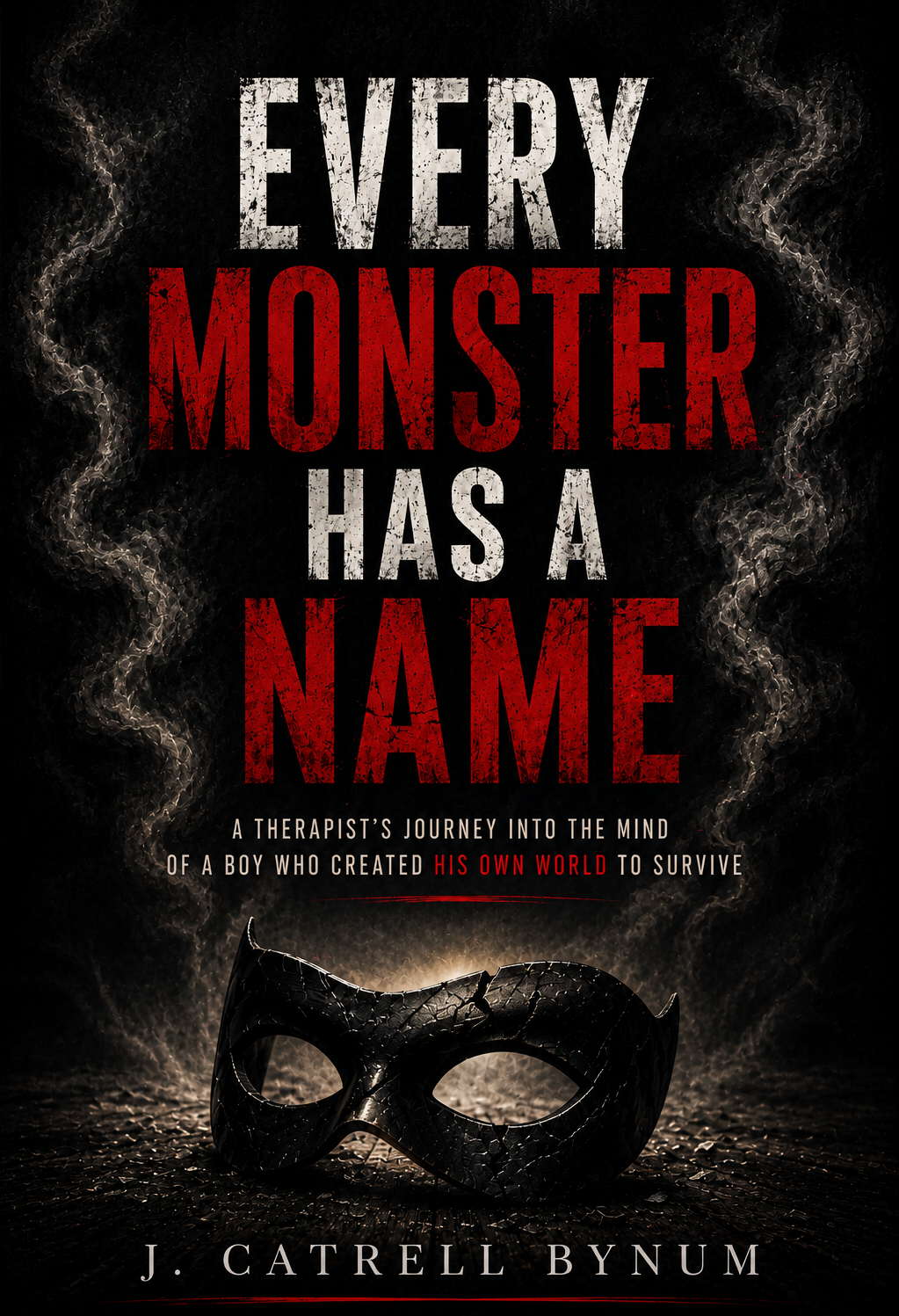
Every Monster Has A Name
Some monsters hide in the dark. Others hide behind a smile.
Introduction
Children rarely tell us what happened.
They tell us how they survived.
It took me years to understand that.
When I was a boy, I thought stories about heroes and monsters were simply entertainment.
As an adult...
As a therapist...
I realized they were often something else.
They were survival.
Like many children, I grew up believing monsters lived beneath beds, inside closets, or somewhere just beyond the edge of the light.
Then I grew up.
I discovered monsters rarely hide where we expect them to.
Sometimes they live inside grief.
Sometimes inside shame.
Sometimes, inside guilt so heavy it convinces us we’re responsible for things we could never control.
Looking back, I realize I wasn’t fascinated by heroes because they defeated monsters. I admired them because they kept moving forward after the monsters had already changed them.
They carried invisible scars beneath their masks.
They reminded me that being wounded wasn’t the same as being defeated.
At the time, I thought those stories were about superheroes.
Now I know they were about people.
I just didn’t know it yet.
Years later, after graduate school, supervision, countless textbooks, and more cups of coffee than I’d care to admit, I found myself sitting across from people fighting battles no one else could see.
Some could explain their pain.
Others couldn’t.
Children, especially, have a remarkable way of telling the truth without ever saying it directly.
They draw.
They play.
They invent worlds.
Adults often dismiss those worlds as imagination.
I’ve learned they’re usually something far more important.
They’re maps.
Maps that reveal where fear lives.
Maps that protect memories too painful to approach directly.
Maps that quietly point toward healing long before a child is ready to say a single word.
The challenge is that those maps rarely look the way we expect them to.
Neither does trauma.
One of the greatest misconceptions about trauma is that it always announces itself clearly.
We expect nightmares.
Flashbacks.
Panic attacks.
Sometimes trauma looks exactly like that.
But sometimes...
it tells stories instead.
It creates heroes.
It creates monsters.
Not because the mind is trying to deceive us...
but because it’s trying to survive.
And survival does not always look heroic.
Sometimes it looks like silence.
Sometimes it looks like distance.
Sometimes it looks like a child building an entire world because the real one has become too painful to understand.
That is where this story begins.
Not with a superhero.
Not with a monster.
But with a child trying to survive...
and a therapist who believed he understood trauma until one young boy taught him otherwise.
Because healing doesn’t begin when we destroy our monsters.
It begins...
when we have the courage to learn their names.